
Your Portfolio Is Likely Missing an Energy Crisis Buffer
Crude oil markets experienced another dramatic overnight surge, with Brent crude briefly piercing the $100-per-barrel mark, completely shrugging off recent coordinated efforts by global powers to tap emergency reserves. Compounding the international tension, the Trump administration has launched new trade investigations that could trigger a fresh wave of tariffs on European and Asian markets once the current temporary measures expire. Consequently, Wall Street appears braced for another lower open today.
3/12/20263 min read
The Shrinking Safety Net
Paying for insurance always feels like a burden until disaster strikes. While many investors hold bonds to soften the blow of a recession or gold to hedge against runaway inflation, most have inadvertently let their "energy crisis insurance" expire.
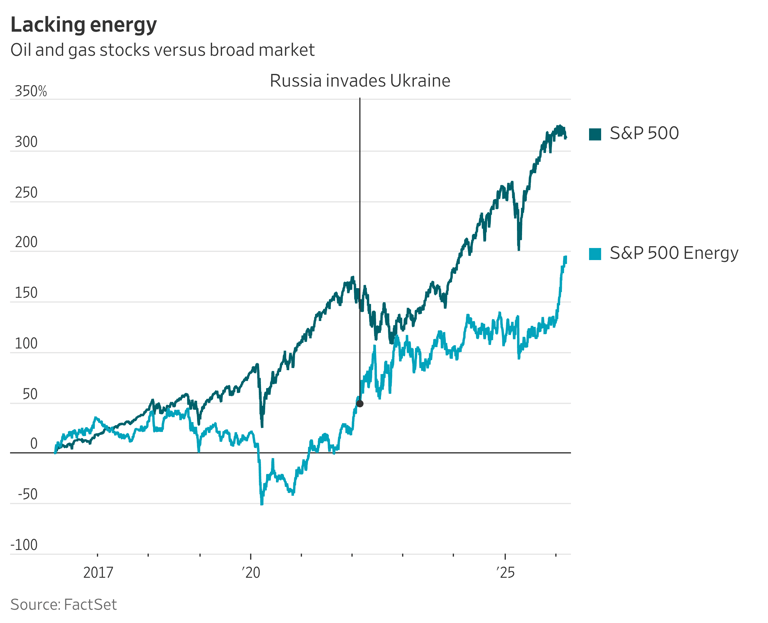
Unless you proactively loaded up on oil and gas equities before the Iranian conflict escalated beyond mere rhetoric, your exposure to the energy sector is likely minimal if you rely on broad market index funds. Historically, holding a standard S&P 500 portfolio provided built-in shock absorption during Middle Eastern geopolitical crises—but that structural advantage has evaporated.
During the market panics of 1973, 1980, and 1990, passive investors faced drawdowns, but their heavy allocation to booming energy stocks mitigated the damage. In 1980, following the Iranian Revolution, energy equities accounted for nearly 30% of the S&P 500's total weight (a massive jump from 7% pre-1973). Eight of the top ten largest companies were oil-related. Even during the 1990 Gulf War, the sector maintained a 13% weighting. Just 13 years ago, Exxon Mobil reigned as the most valuable corporation in America.
Fast forward to today: at the start of this year, Exxon represented a mere 1% of the index. The entire energy sector combined barely scrapes 3%—less than half the market cap of tech giant Nvidia alone.
This drastic reduction isn't solely due to Wall Street's obsession with technology. Energy companies spent years delivering highly volatile earnings and opting to return massive amounts of capital to shareholders rather than reinvesting, largely due to a lack of high-return drilling opportunities.
So, should you have maintained a heavy energy allocation just in case? Mathematically, no. An investor who kept 20% of their capital in the S&P 500 Energy Index and 80% in the broader market over the past decade would have underperformed a pure S&P 500 strategy by about 10%. While the current crisis might make paying that "insurance premium" seem brilliant in hindsight, capitalizing on it requires perfect market timing.
The harsh reality is that the current geopolitical-driven selloff could get ugly. However, unlike a physical disaster that destroys property permanently, financial markets eventually recover if given enough time. For investors with a strong stomach, carrying minimum portfolio insurance—skipping underperforming hedges like gold, excess bonds, or complex buffer funds—generally yields superior long-term wealth accumulation.
Key Equities in Focus
UiPath: Despite posting quarterly earnings that beat analyst estimates, the AI and automation firm projected slower annual revenue growth, sending its stock down 5% in the premarket.
Atlassian: The software company behind Trello and Jira announced a 10% workforce reduction to redirect capital into artificial intelligence initiatives. Shares climbed over 2% before the opening bell.
GlobalFoundries: The semiconductor manufacturer announced a 20-million-share secondary offering alongside a $300 million stock buyback program. Shares fell 4% ahead of regular trading.
Petco Health & Wellness: Anticipating a return to annual sales expansion, the pet supply retailer saw its stock surge by a massive 14% in early trading.
Honda Motor: The Japanese auto giant warned of a staggering $15.7 billion financial hit stemming from a strategic pivot in its electric vehicle roadmap, likely resulting in an annual net loss. Its American depositary receipts tumbled nearly 8% premarket.
Market Radar: Essential Reading
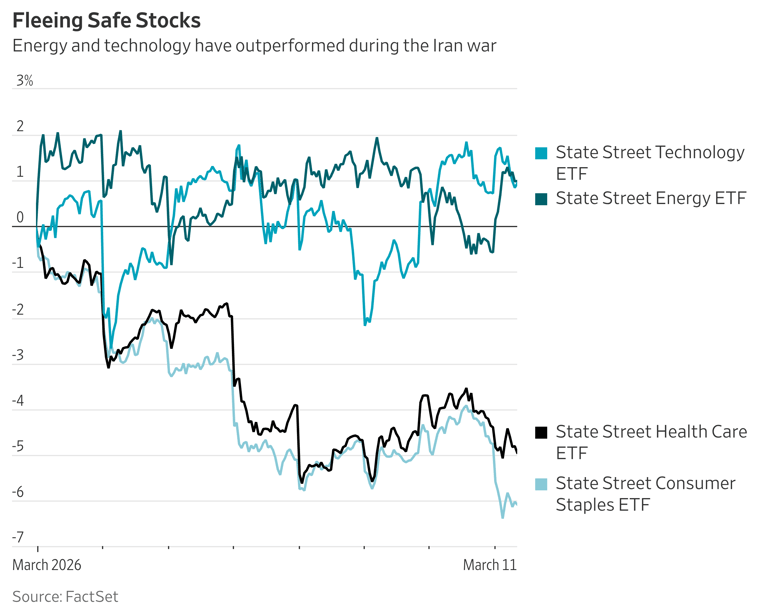
Strait Disruption: Optimism for a rapid resumption of commercial shipping through the Strait of Hormuz is fading as Iranian attacks intensify without the presence of U.S. naval escorts.
Mine Warfare Explainer: A deep dive into how Iran’s deployment of relatively simple sea mines grants them the outsized ability to paralyze the global supply chain.
AI Shopping Wars: A federal judge ruled that Amazon can temporarily block third-party AI shopping bots from its platform, signaling a new era in retail competition.
Mortgage Shifts: Driven by the desire for immediate monthly savings, a growing wave of American homebuyers is opting for adjustable-rate mortgages (ARMs).
Automated Valleys: Tech workers in Silicon Valley are increasingly leaning on automated bots to handle their mundane daily tasks.
Today in Financial History
On this exact date in 1956, the Dow Jones Industrial Average shattered the 500-point threshold for the very first time, accomplishing this milestone less than 18 months after crossing the 400-point mark.
Lenexecute
I’m James Wilson. I spent over a decade as a senior analyst at a Greenwich-based hedge fund, managing the noise of the mid-cap and tech sectors. I’ve seen how the "big money" moves, and frankly, most retail news is 24 hours too late.
Every workday morning, I send out my Stock Market AM notes
Contact
James Wilson
Chief Market Strategist | Lenexecute
2 Greenwich Plaza, Suite 200
Greenwich, CT 06830
Direct: (203) 622-0195
lenexecute.com
© 2026. All rights reserved.