
Why the Ghost of 1979 is Spooking the Fed
Plus: Nvidia reboots its Chinese semiconductor pipeline. American equity futures are signaling a third consecutive day of gains, completely shrugging off the fact that international crude prices are flirting with the $100 threshold. However, traders should abandon any hope for dovish monetary policy from today's Federal Reserve gathering. In other tech news, Nvidia announced it is restarting production on a specific class of microchips explicitly tailored for the Chinese market.
3/18/20264 min read
Market Data at a Glance
S&P 500 Futures: 6,810.00 (+0.54%)
DJIA Futures: 47,592.00 (+0.52%)
Nasdaq 100 Futures: 25,192.00 (+0.71%)
U.S. 10-Year Treasury Note: 4.18 (-0.48%)
Crude Oil Continuous: 94.72 (-1.55%)
Gold Continuous: 4,990.90 (-0.35%)
Crude Spikes and Rate Cuts Are Incompatible
The infamous "Saturday Night Massacre" might sound like a brutal battlefield event, but the only casualties during that emergency October 1979 Federal Reserve session were equity and fixed-income portfolios. The historical lessons from that day perfectly illuminate why interest rate forecasts have drastically shifted amidst the recent Iranian oil shock.
Throughout the 1970s, twin energy crises ignited rampant inflation, exacerbated by a central bank that initially refused to fight the economic fire aggressively. Eventually, the political and financial toll of regaining price stability became a bitter pill to swallow.
Enter Paul Volcker. The then-new Fed Chair—who remains a personal hero to current Chairman Jerome Powell—refused to be timid. The resulting collateral damage included skyrocketing Treasury yields, a painful double-dip recession, and arguably the political demise of Jimmy Carter's one-term presidency.
Fixed-income traders widely believe the current Federal Reserve is viewing today’s geopolitical landscape through that exact historical prism. They prefer an ounce of prevention now over a pound of cure later. No current policymaker wants to be cornered into repeating Volcker's draconian 1979 measures to crush a revived inflationary wave.
The derivatives market reflects this shifting reality. According to futures pricing, the implied probability of the Fed executing any rate cut by the September meeting has plummeted from 90% a month ago to a mere 50% today. This identical downward revision applies to every scheduled Fed gathering this year. While today's press conference with Chair Powell or the updated FOMC economic projections could alter this trajectory, betting on a dovish pivot seems foolish.
"While many folks dream of an accommodative Fed in response to an oil shock, the best that is going to come is nothing, and the longer this persists the more likely hikes may be on the horizon," noted Bob Elliott, the former macro hedge-fund veteran who now serves as Chief Investment Officer at Unlimited Funds.
This represents a massive psychological reversal from the previous two years. Back then, investors eagerly calculated how rapidly the Fed would slash rates despite sticky inflation, often interpreting miserable economic data (like last year's anemic job growth) as a bullish excuse to blindly buy stocks.
Yet, parts of Wall Street haven't received the memo. The Nasdaq-100—a highly rate-sensitive index dominated by mega-cap tech—is hovering just 5% below its all-time high. It has essentially traded flat since mid-February, well before the Middle East bombings and the subsequent collapse of rate-cut hopes.
The 25-basis-point reduction executed in December, which marked the sixth cut since the central bank pivoted to easing in September 2024, might be the last relief the market sees for the foreseeable future if the Strait of Hormuz blockage deteriorates. Except for a tiny fraction of equities that thrive on surging commodity prices, negative headlines out of the Middle East will simply translate to negative returns for broad portfolios.
Economic conditions will have to turn exceptionally ugly before rate setters change their current stance.
Key Equities in Focus
Mitsui O.S.K. Lines: The Japanese shipping giant saw its shares skyrocket 12% following disclosures that prominent activist investor Elliott Investment Management had acquired a significant stake.
Micron Technology: The semiconductor heavyweight is slated to release its earnings report after the closing bell. The company recently surpassed a $500 billion market capitalization at Tuesday’s close, and its stock continues to climb in premarket trading.
Lululemon Athletica: The premium activewear brand suffered a profit drop due to an increase in discounted sales. Additionally, succumbing to pressure from its estranged founder, the firm appointed a new board director. Shares fell 2% ahead of the open.
Unilever: The consumer-staples conglomerate dropped over 1% following a Bloomberg exclusive revealing the company is exploring a massive spin-off of its food divisions.
General Mills: The corporate parent of Cheerios will post its quarterly financials prior to the market open today.
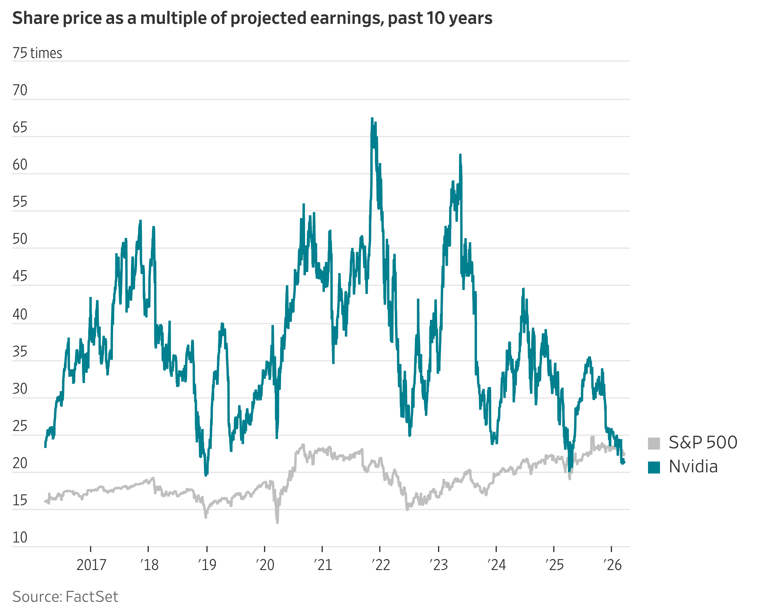
Coherent & Lumentum: These Nvidia-backed fiber-optic specialists surged in the premarket. Both companies, scheduled to join the S&P 500 later this month, experienced volatile trading on Tuesday after Nvidia confirmed it plans to utilize both optical and copper networking architectures at its massive GTC conference in San Jose, California.
Market Radar: Essential Reading
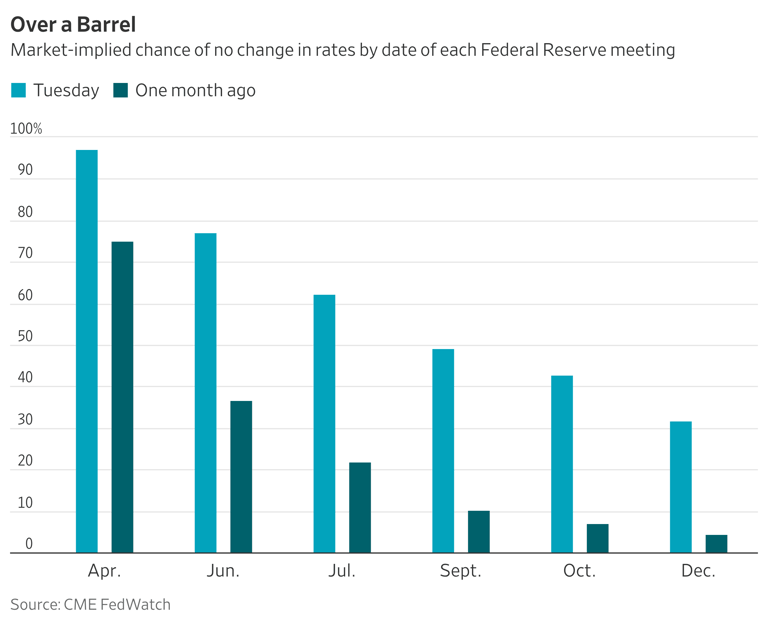
A Divided Fed: Central bankers are widely anticipated to keep interest rates unchanged this week. As the Fed becomes increasingly fractured, President Trump’s recent appointees appear to be the only voting members actively lobbying for cuts.
Silicon Valley Scams: "Fake it till you make it" strikes again. A previously pardoned fraudster is currently circulating through elite networking circles, aggressively raising capital for a flashy new technological "invention."
Crypto Showdown: U.S. lawmakers are pushing the CLARITY Act to tighten oversight on digital assets. However, the proposed legislation has sparked a massive lobbying war between traditional banking institutions and crypto platforms like Coinbase over staking rewards that essentially mimic traditional interest yield.
AI Surveillance: Your employer mandated that you integrate artificial intelligence into your daily workflow. Now, they are deploying sophisticated tracking software to calculate exactly how much your AI usage is costing the company.
The IPO Warning: A sudden tidal wave of Initial Public Offerings might be the ultimate red flag confirming we are trapped in a market bubble, according to analysis by Owenomics.
Today in Financial History
On this exact date in 1974, Arab member nations of OPEC officially ended a punishing five-month oil embargo against the United States, a geopolitical maneuver that had previously sent domestic energy costs spiraling out of control.
Lenexecute
I’m James Wilson. I spent over a decade as a senior analyst at a Greenwich-based hedge fund, managing the noise of the mid-cap and tech sectors. I’ve seen how the "big money" moves, and frankly, most retail news is 24 hours too late.
Every workday morning, I send out my Stock Market AM notes
Contact
James Wilson
Chief Market Strategist | Lenexecute
2 Greenwich Plaza, Suite 200
Greenwich, CT 06830
Direct: (203) 622-0195
lenexecute.com
© 2026. All rights reserved.