
The Trillion-Dollar Question: Are Big Tech's Valuations Justified?
Plus: Nvidia's massive revenue forecast. Following a brief Monday reprieve from geopolitical anxiety, Wall Street is gearing up for a shaky start. Tehran shows absolutely zero inclination to release its grip on Middle Eastern energy flows, and key global allies remain deaf to President Trump's requests for naval assistance. However, before crude oil completely hijacked the financial narrative, Nvidia CEO Jensen Huang brought the focus back to artificial intelligence on Monday. He boldly forecasted that his firm would generate a staggering $1 trillion in revenue from its Rubin and Blackwell semiconductors by the close of 2027.
3/17/20264 min read
Market Data at a Glance
S&P 500 Futures: 6,736.25 (-0.28%)
DJIA Futures: 47,185.00 (-0.22%)
Nasdaq 100 Futures: 24,799.50 (-0.37%)
U.S. 10-Year Treasury Note: 4.23 (+0.09%)
Crude Oil Continuous: 96.70 (+3.42%)
Gold Continuous: 5,011.70 (+0.19%)
The Rebirth of the Conglomerate Premium
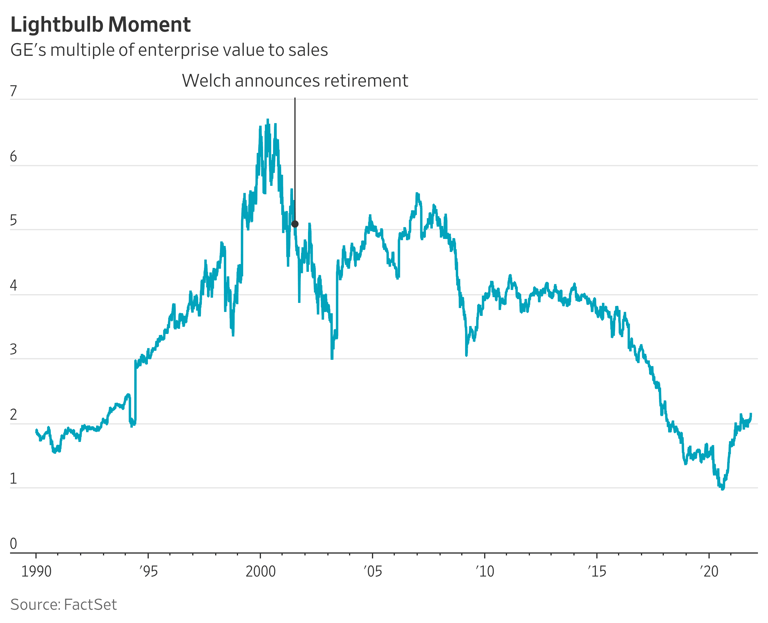
Remember the era of Jack Welch?
Once universally hailed as the "Manager of the Century," the legendary General Electric executive orchestrated roughly 1,000 acquisitions during his tenure. Yet, his sprawling empire ultimately crumbled. GE plummeted from its throne as America's most valuable corporation to a dysfunctional entity, eventually being carved into three separate companies by outside leadership.
Market trends are cyclical. During the 1960s, conglomerates were the ultimate craze, utilizing their inflated equity to swallow completely unrelated enterprises. Henry Singleton’s Teledyne was the masterclass in this strategy—until investor sentiment shifted. Anticipating the change, Singleton intelligently liquidated assets and executed massive stock buybacks.
Que Nguyen, Chief Investment Officer for equity strategies at Research Affiliates, calls that pivot "the smart thing to do." She and co-author Noah Beck recently published research highlighting that while conglomerates occasionally experience massive inflation, they historically trade at a modest "diversification discount" compared to the sum of their standalone parts.
Today, however, the conglomerate business model is experiencing a massive renaissance. As of February, the combined valuation of Microsoft, Alphabet, Amazon, and Apple exceeded the sum of their individual business units by an eye-watering $5.6 trillion. That represents a roughly 70% premium when evaluated against the price-to-sales multiples of pure-play competitors. According to Beck and Nguyen, these tech titans have sprawled into so many distinct sectors that they indisputably qualify as modern conglomerates.
How can the market justify this massive premium? One argument is that modern tech giants possess far superior internal synergies than the industrial conglomerates of the past. For instance, Alphabet leverages its vast Google search data to perfectly optimize YouTube’s recommendation engine. Similarly, seamlessly embedding Apple Pay directly into billions of iPhones allowed Apple to bypass the astronomical marketing costs that traditional fintech startups face.
Yet, even factoring in these synergies, such exorbitant premiums stretch logic—especially considering their spectacular, cash-burning failures. "Let’s not forget that, for a while there, we thought we were going to get an Apple car," Nguyen points out.
Undoubtedly, these behemoths dominate their primary verticals—Google in search, Apple in smartphones, Amazon in e-commerce. Nguyen notes that while these astronomical valuations could endure for some time, investors historically operate on the flawed assumption that current apex predators will rule forever. They never do. Dominating an industry simply paints a massive bullseye on a company's back.
Consequently, expanding into new territories might seem like a necessary survival tactic. A handful of these tech side-projects have morphed into spectacularly profitable divisions, reinforcing Wall Street's unwavering, cult-like devotion to their "celebrity founders" and "celebrity CEOs."
History, however, suggests we've seen this movie before.
Key Equities in Focus
Uber Technology: The ride-sharing giant saw its stock climb over 2% in the premarket following Monday's announcement of an expanded self-driving vehicle partnership with Nvidia.
Asian Automakers: Shares of Nissan Motor, Hyundai Motor, Kia, Geely Automotive, and Isuzu Motors all trended higher after Nvidia revealed it was broadening its autonomous driving collaborations with the manufacturers.
Chevron & Exxon Mobil: American energy heavyweights posted modest premarket gains as the ongoing conflict in Iran continued to push crude prices upward.
Occidental Petroleum: The U.S. driller gained roughly 1% ahead of the bell, completely brushing off news of a drone strike on the Shah gas field in the UAE—a major joint venture it developed alongside the Abu Dhabi National Oil Co.
Lululemon Athletica: The premium athletic apparel brand is scheduled to release its quarterly earnings report immediately following Tuesday's closing bell.
International Consolidated Airlines Group (IAG): The corporate parent of British Airways announced an extended suspension of all flights to the Middle East due to the Iranian conflict. Shares remained mostly flat on the news.
Market Radar: Essential Reading
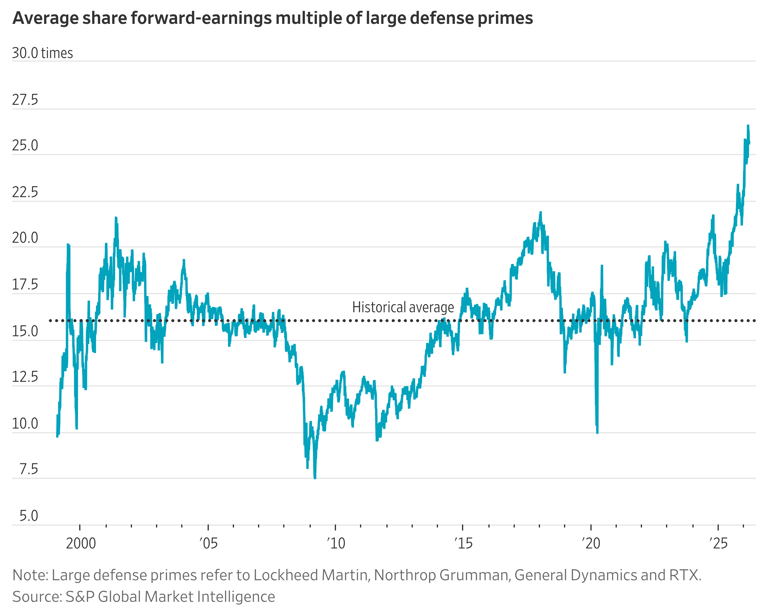
Defense Sector Paradox: The Iranian conflict should theoretically be a goldmine for U.S. weapons manufacturers, yet top defense stocks have barely moved since hostilities began. Investors have valid reasons to remain hesitant.
Credit Contagion: A recent lending collapse is highlighting exactly how major American banks subsidized the explosive private-credit boom, offering a grim preview of what an unraveling might look like.
Bi-Annual Earnings? The SEC is reportedly drafting a controversial proposal that would eliminate the mandatory quarterly earnings report, allowing public companies the option to disclose financial results just twice a year.
Inflation's Stubborn Grip: A persistent string of supply chain disruptions has kept prices above the Fed’s target for five consecutive years. Central bankers must now quantify exactly what this means for long-term interest rates.
OpenAI's Strategic Pivot: The AI powerhouse is finalizing a major operational shift to aggressively target business users and coding applications, intentionally deprioritizing its other experimental divisions.
Corporate Accountability: According to venture capitalist Tomasz Tunguz, corporations and their employees can no longer use "AI hallucinations" as a legal or ethical shield for mistakes.
Today in Financial History
On this exact date in 1938, the governing committee of the New York Stock Exchange voted unanimously to formally expel former NYSE President Richard Whitney. He was caught embezzling hundreds of thousands of dollars worth of securities from various trust funds under his direct supervision.
Lenexecute
Explore our sleek website template for seamless navigation.
Contact
Newsletter
info@email.com
123-123-1234
© 2026. All rights reserved.