
Did the Super Bowl Just Signal an AI Market Top?
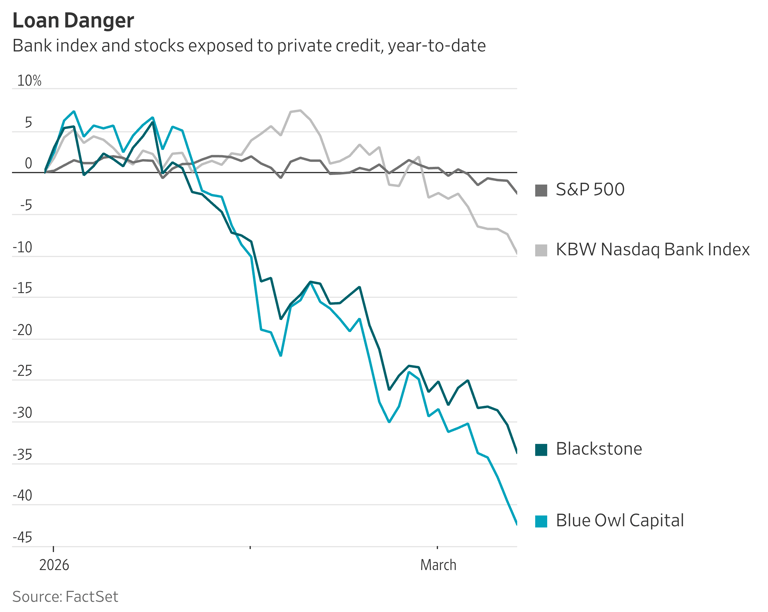
Alongside a growing stampede out of private credit. Happy Friday the 13th—what could possibly go wrong? Equity markets are poised to extend their recent slide as crude oil flirts dangerously with the $100-per-barrel threshold. Simultaneously, a wave of investors is scrambling to exit formerly popular private credit funds, only to discover that liquidating their positions instantly is simply not an option for everyone.
3/13/20264 min read
Market Data at a Glance
S&P 500 Futures: 6,688.50 (+0.16%)
DJIA Futures: 47,103.00 (+0.19%)
Nasdaq 100 Futures: 24,802.25 (+0.12%)
U.S. 10-Year Treasury Note: 4.28 (+0.16%)
Crude Oil Continuous: 95.38 (-0.37%)
Gold Continuous: 5,101.40 (-0.48%)
Unorthodox Warning Signs
Identifying an overheated market doesn't always require complex financial modeling or deep spreadsheet analysis. Sometimes, the most glaring indicators of excess are impossible to ignore—and that is exactly why they work.
Consider the infamous "Skyscraper Curse," an architectural metric suggesting that the completion of the world's tallest building often coincides with an impending economic downturn for the host municipality or nation. For instance, New York's iconic Chrysler Building opened its doors right at the onset of the 1929 stock market crash. Malaysia's Petronas Towers were finished just as the Asian Financial Crisis swept the region. Similarly, the unveiling of Dubai’s Burj Khalifa aligned perfectly with the depths of the Global Financial Crisis (the tower was even renamed to honor the Abu Dhabi ruler who bailed out the debt-ridden emirate).
Corporate naming rights offer another reliable red flag. The "stadium curse" is a historically accurate barometer of corporate hubris leading to disaster. Notable casualties include Enron Field, Adelphia Coliseum, Wachovia Center, and the recently collapsed FTX Arena.
As legendary investor Victor Niederhoffer noted in his book Practical Speculation, corporations suffer from the same psychological flaws as retail traders. "When they are at their peak, they reach for the sun," he wrote. Niederhoffer speaks from painful experience, having personally managed two high-profile funds that ultimately imploded.
However, behavioral finance expert Owen Lamont argues that nothing captures speculative mania quite like Super Bowl commercials. While these 30-second spots carry massive price tags, they are still vastly cheaper than stadium naming rights, making them the ultimate megaphone for newly minted startups desperate to announce their arrival to the masses.
Lamont, currently a portfolio manager at Acadian, notes that not every cluster of industry-specific ads guarantees a bubble; sometimes a trend is just genuinely popular. The danger arises only when these campaigns actively fuel or reflect reckless retail speculation.
During the peak of the Dot-com frenzy in 2000, the championship broadcast featured a minimum of 14 internet-based commercials, famously including the doomed Pets.com, which rushed its IPO and subsequently went bankrupt. A similar phenomenon occurred in 2022 during the "Crypto-Bowl," which was dominated by platforms like FTX and Coinbase.
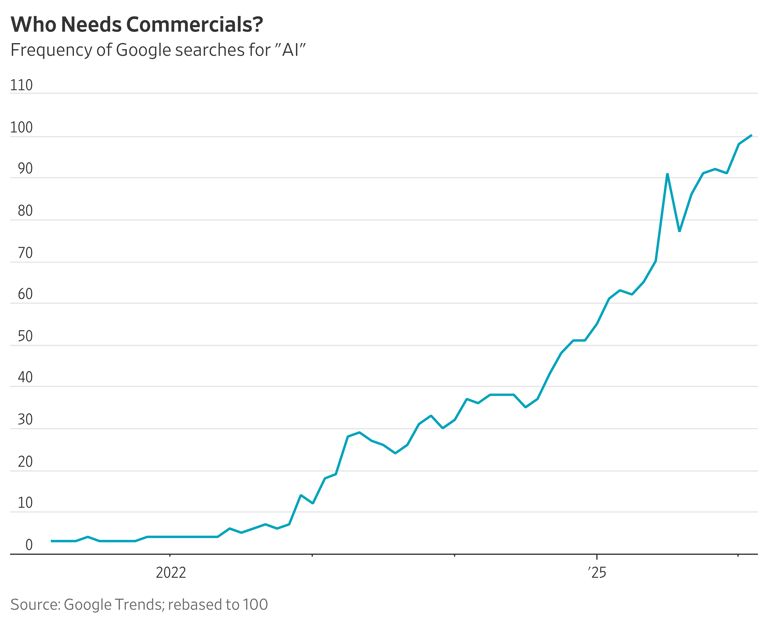
According to Lamont, last month’s broadcast will likely be remembered as the "AI-Bowl." Viewers were bombarded with 15 separate advertisements for artificial intelligence platforms and services.
Does this confirm we are in an AI bubble?
"I think there is plenty of evidence that there are excesses in the stock market," Lamont observes, though he hesitates to declare it a full-blown bubble just yet. He points out that a true bubble typically involves insiders frantically dumping shares onto a mesmerized public. Academic research does, however, confirm a short-term stock price bump for companies immediately following a Super Bowl appearance.
For now, AI startups might not be draining your wallet, but they are absolutely demanding your attention.
Key Equities in Focus
Adobe: The software giant announced that veteran CEO Shantanu Narayen will step down pending the selection of a successor. Despite reporting an overall revenue increase, its AI-specific sales fell short of expectations, sending shares tumbling roughly 8.5% in the premarket.
Ulta Beauty: The cosmetics powerhouse warned of decelerating annual growth and delivered a disappointing EPS forecast. The stock plunged 8.5% in extended trading.
CF Industries, Nutrien, & Mosaic: These major fertilizer producers saw their shares rise ahead of the open, continuing their upward trajectory as the Middle East conflict severely disrupts global exports.
Stryker: The medical-tech manufacturer confirmed that an ongoing cyberattack, allegedly tied to the conflict in Iran, continues to hinder its corporate operations.
Lennar: A harsh real estate environment dragged down sale prices, leading the homebuilding giant to report a drop in quarterly revenue.
BuzzFeed: The struggling digital media outlet issued a dire "going-concern" warning, officially stating it lacks sufficient capital to meet its cash obligations over the next 12 months.
Market Radar: Essential Reading
Iran's Demands: Tehran has established aggressive preconditions for entering peace negotiations, insisting on an immediate cessation of airstrikes, financial reparations, and ironclad guarantees against future military action.
Evaporating Optimism: Wall Street's initial confidence in a brief conflict was severely misplaced. As James Mackintosh points out, now is not the time for certainty regarding the war's conclusion.
Ticket Shock: The dual pressures of soaring crude prices and the Middle East conflict are forcing commercial airlines to hike passenger fares, putting consumer resilience to the test.
Grid Upgrades: The utility sector is launching a massive, AI-driven expansion of the electrical grid. This infrastructure overhaul is projected to be the most costly since WWII, raising serious questions about who will foot the bill.
Housing Legislation: In an 89-10 vote, the U.S. Senate passed a landmark housing bill designed to streamline residential development while effectively banning large institutional investors from acquiring single-family homes.
Today in Financial History
On this exact date in 1986, tech pioneer Microsoft debuted as a publicly traded company. The software firm launched its IPO at $21 per share, successfully raising $61 million. Interestingly, this historic listing occurred just 24 hours after Oracle’s own public market debut.
Lenexecute
Explore our sleek website template for seamless navigation.
Contact
Newsletter
info@email.com
123-123-1234
© 2024. All rights reserved.