
Arbitrage Anxiety: Is the Paramount-Warner Deal in Jeopardy?
Plus: The global race to secure the Strait of Hormuz. Discussions regarding potential military intervention to unblock the Strait of Hormuz triggered a late-day equity rally on Thursday, simultaneously cooling off petroleum prices from their multi-year peaks. However, the macroeconomic stakes remain perilously high. Authorities in Saudi Arabia are warning that Brent crude might skyrocket to an unprecedented $180 per barrel if the Middle East conflict drags on through April. Consequently, pre-market indicators suggest Wall Street is bracing for a lower open today.
3/20/20263 min read
A Hollywood Cliffhanger for Wall Street
Could the largest leveraged buyout in corporate history actually collapse?
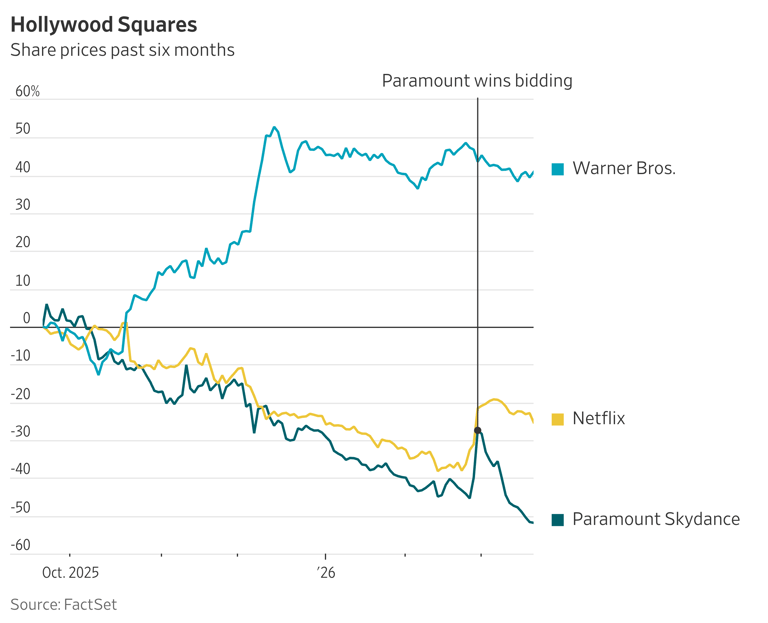
Just weeks ago, David Ellison’s Paramount Skydance seemed destined for a fairy-tale conclusion after defeating Netflix in a $111 billion (debt-inclusive) bidding war for Warner Bros. Today, market indicators imply severe delays—or potentially an outright disaster.
Since securing the deal, Paramount's equity has plummeted 34%. Even more telling is Warner's current valuation, which settled at $27.63 on Thursday. Merger arbitrageurs who remain confident that Paramount will deliver its promised $31 per share in cash by late September—right before a contractual "ticking fee" activates—could theoretically lock in a massive 20% annualized yield. This payoff dwarfs typical cash-takeover premiums. Since arbitrage traders usually amplify these bets with massive leverage, why is the smart money suddenly hesitating?
Rich Greenfield, a prominent media analyst at LightShed Partners, projects the acquisition won't cross the regulatory finish line until early next year. Because the ticking fee is relatively small, pushing the closing date back severely dilutes the arbitrage return profile. Nevertheless, an insider familiar with the regulatory and financial mechanics insists the September target remains highly realistic.
If antitrust watchdogs successfully block the merger, Paramount faces an existential financial threat: a massive $7 billion termination penalty. This comes on top of the $2.8 billion fee they already indirectly surrendered to Netflix. To put that catastrophic scenario in perspective, Paramount’s entire market capitalization has now cratered below the $10 billion mark.
Despite these hurdles, funding shouldn't be the primary roadblock. Larry Ellison, the Oracle billionaire and David's father, has personally backstopped the family trust supplying the core equity. However, the original financial blueprint likely assumed that sovereign wealth funds from Abu Dhabi, Qatar, and Saudi Arabia would shoulder much of the burden, having previously pledged $24 billion to an earlier bid.
The complication? This blockbuster agreement was signed mere hours before the Iranian conflict threw Middle Eastern sovereign finances into absolute chaos. If the war drastically escalates, these petrostates might severely reduce their commitments or walk away entirely.
Wall Street vividly remembers a chilling parallel from the 2008 financial crisis: Dow Chemical nearly faced bankruptcy after winning a massive corporate bidding war, only to have a Kuwaiti state-backed entity abruptly abandon their joint venture right before closing.
Given the high-profile prestige of this merger, the Ellisons' close political ties to President Trump, and Larry Ellison's limitless pockets, the required capital will likely materialize. But even after closing, Paramount must aggressively execute massive operational synergies to service its colossal debt load. Fortunately for current Warner shareholders, they will have already pocketed their $31 per share in cash, allowing them to watch the ensuing corporate drama from the cheap seats.
Key Equities in Focus
FedEx: The global logistics giant jumped 10% in the premarket following a boosted financial outlook driven by robust fiscal third-quarter revenue growth.
Super Micro Computer: Shares plunged over 20% early today. Management suspended two employees and terminated a contractor amid allegations of a severe export-control violation scheme designed to smuggle U.S.-assembled servers into China.
Nexstar Media & Tegna: The massive $6.2 billion broadcasting merger officially closed after successfully clearing federal regulatory hurdles. Tegna spiked 9%, while Nexstar climbed over 2% ahead of the bell.
Unilever: The corporate giant behind Hellmann's mayonnaise and Dove is actively negotiating the sale of its food portfolio to spice conglomerate McCormick. Unilever gained 1% in London trading, while McCormick ticked down premarket.
Novartis: The Swiss pharmaceutical powerhouse secured an experimental breast cancer treatment from Synnovation Therapeutics in a massive agreement valued at up to $3 billion. Shares drifted slightly higher.
Scholastic: The iconic publishing house announced a $200 million stock buyback program, funded entirely by liquidating corporate real estate assets. Shares leaped 10% on exceptionally thin premarket volume.
Market Radar: Essential Reading
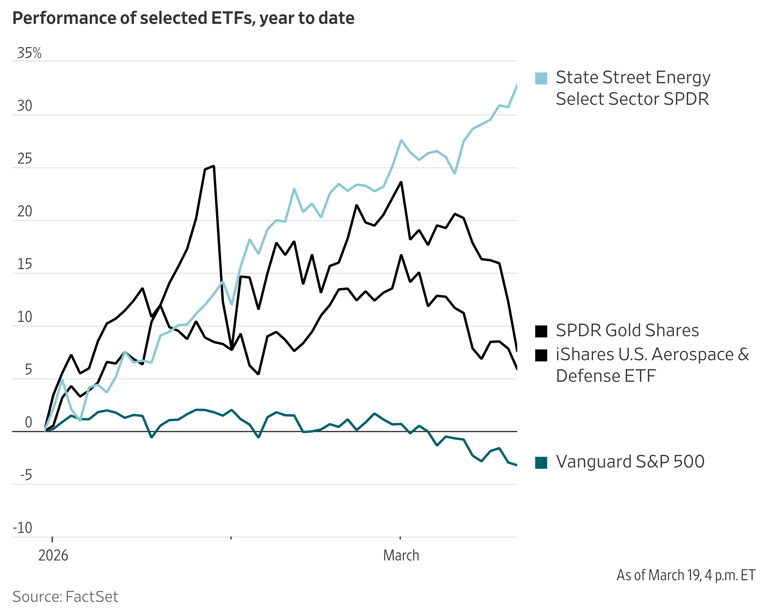
$180 Crude Warning: Saudi oil officials project that sustained Iranian hostilities could push global crude prices above the $180 mark by late April.
The New Metric: Global energy markets now hinge entirely on a highly volatile new data point: military battle damage assessments.
Infrastructure Under Fire: A detailed WSJ mapping of critical energy facilities that have already been severely compromised across the Middle East.
China's Economic Stall: China's once-unstoppable growth engine is sputtering, severely battered by a devalued currency and crippling deflation.
Banking Deregulation: In a massive victory for Wall Street, regulators introduced proposals allowing megabanks to drastically reduce their required capital reserves, effectively rolling back critical safeguards established to prevent another 2008-style meltdown.
The Fear Premium: Intelligent Investor columnist Jason Zweig notes the Iran war is essentially a massive marketing tool for the financial sector. "If you didn't buy an umbrella while the sun was shining, that protection will cost you dearly now."
Today in Financial History
On this exact date in 1942, the Federal Reserve and the U.S. Treasury struck a landmark agreement to enforce wartime yield-curve control. This aggressive, early experiment in highly unorthodox monetary policy remained active until 1951.
Lenexecute
I’m James Wilson. I spent over a decade as a senior analyst at a Greenwich-based hedge fund, managing the noise of the mid-cap and tech sectors. I’ve seen how the "big money" moves, and frankly, most retail news is 24 hours too late.
Every workday morning, I send out my Stock Market AM notes
Contact
James Wilson
Chief Market Strategist | Lenexecute
2 Greenwich Plaza, Suite 200
Greenwich, CT 06830
Direct: (203) 622-0195
lenexecute.com
© 2026. All rights reserved.